
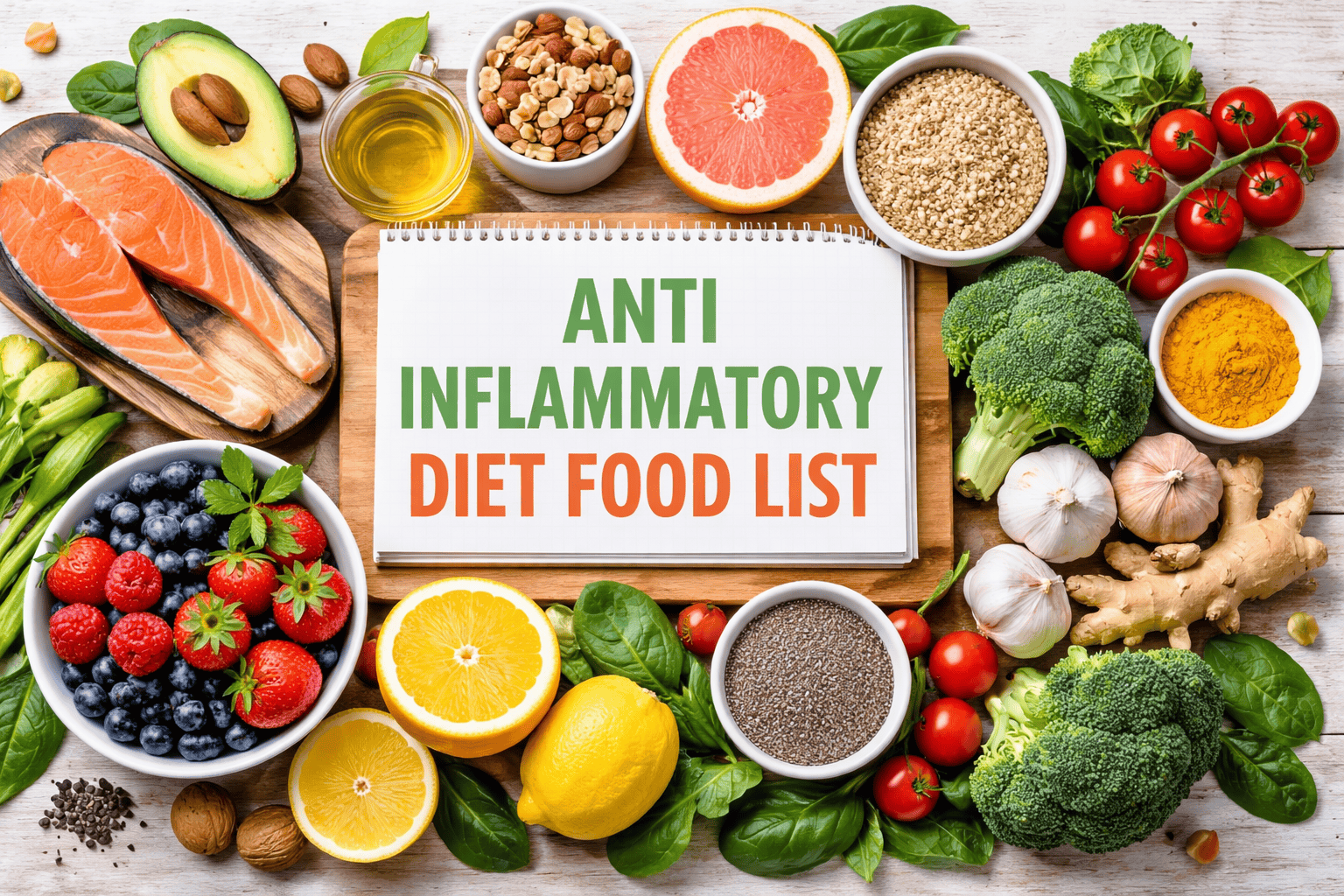
Inflammation is the body’s natural response to injury, infection, or harmful stimuli. While short-term inflammation helps the body heal, chronic inflammation can lead to many serious health conditions such as heart disease, diabetes, arthritis, and obesity.
One of the most effective ways to reduce inflammation naturally is through diet. By choosing the right foods, you can support your immune system and protect your body from long-term health problems. This is where an Anti inflammatory diet food list becomes extremely helpful.
This detailed guide will help you understand everything about the Anti inflammatory diet food list, including the best foods to eat, how they work, and how to build a healthy diet that fights inflammation.
Table of Contents
- What Is Inflammation?
- Why Diet Matters for Inflammation
- Benefits of an Anti-Inflammatory Diet
- Anti Inflammatory Diet Food List
- Fruits That Fight Inflammation
- Vegetables That Reduce Inflammation
- Healthy Fats for Anti-Inflammatory Diet
- Whole Grains That Reduce Inflammation
- Nuts and Seeds for Inflammation Control
- Spices and Herbs That Fight Inflammation
- Foods to Avoid That Cause Inflammation
- Simple Anti-Inflammatory Diet Plan
- Tips for Following an Anti-Inflammatory Diet
- Frequently Asked Questions
- Final Thoughts
What Is Inflammation?
Inflammation is the body’s natural defense mechanism against injury, bacteria, or viruses. When the body detects a threat, the immune system activates inflammation to protect tissues and begin the healing process.
There are two main types:
Acute Inflammation
This is short-term inflammation caused by injuries or infections. Symptoms may include swelling, redness, pain, and heat.
Chronic Inflammation
Chronic inflammation occurs when the immune system stays active for a long time. This type of inflammation is dangerous because it can damage tissues and organs over time.
Many health experts recommend following an Anti inflammatory diet food list to reduce chronic inflammation naturally.
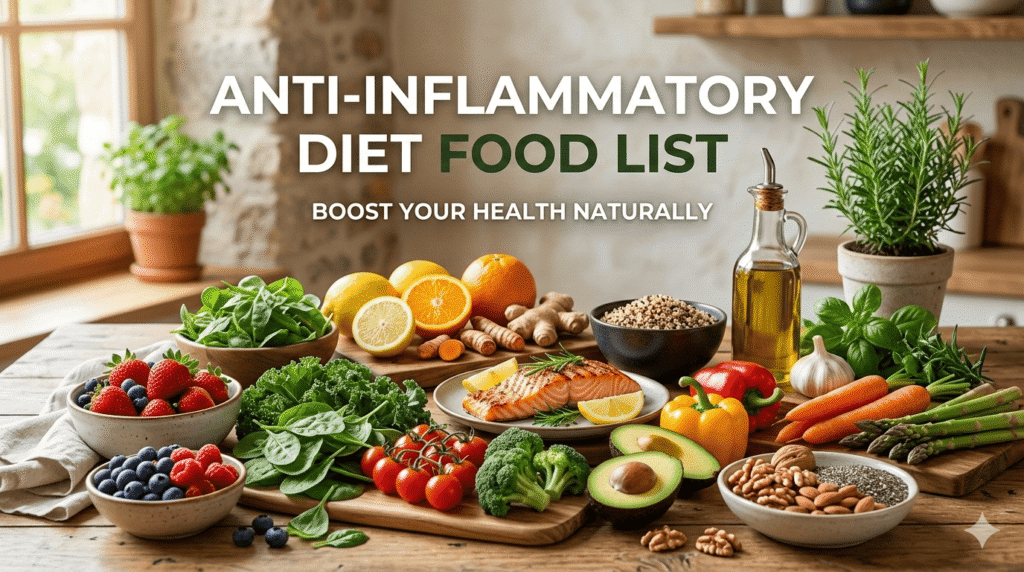
Why Diet Matters for Inflammation
Food plays a powerful role in controlling inflammation. Certain foods increase inflammation, while others reduce it.
For example:
Inflammation-causing foods
- Processed foods
- Refined sugar
- Fried foods
- Processed meats
Inflammation-reducing foods
- Fruits
- Vegetables
- Whole grains
- Healthy fats
Following an Anti inflammatory diet food list helps your body fight inflammation while improving overall health.
Benefits of an Anti-Inflammatory Diet
A diet rich in anti-inflammatory foods provides many health benefits.
1. Reduces Risk of Chronic Diseases
A well-planned Anti inflammatory diet food list helps reduce the risk of diseases such as heart disease, diabetes, and cancer.
2. Supports Heart Health
Anti-inflammatory foods help lower cholesterol levels and improve blood circulation.
3. Improves Brain Function
Foods rich in antioxidants protect brain cells and support cognitive function.
4. Helps Manage Weight
Following an Anti inflammatory diet food list encourages whole, natural foods that help maintain a healthy weight.
5. Strengthens Immune System
Anti-inflammatory foods support the immune system and improve the body’s ability to fight infections.
Anti Inflammatory Diet Food List
Here is the ultimate Anti inflammatory diet food list that helps reduce inflammation naturally.
Top Anti-Inflammatory Foods
- Berries
- Fatty fish
- Broccoli
- Avocados
- Green tea
- Peppers
- Mushrooms
- Grapes
- Turmeric
- Olive oil
- Tomatoes
- Nuts
- Seeds
- Leafy greens
- Whole grains
- Garlic
- Ginger
- Dark chocolate
- Beans
- Yogurt
- Sweet potatoes
- Citrus fruits
- Apples
- Carrots
- Onions
Including these foods in your daily meals creates a powerful Anti inflammatory diet food list for better health.
Fruits That Fight Inflammation
Fruits are rich in vitamins, minerals, and antioxidants that reduce inflammation.
1. Berries
Berries such as strawberries, blueberries, and raspberries contain antioxidants called anthocyanins that help reduce inflammation.
Adding berries to your Anti inflammatory diet food list can support heart and brain health.
2. Oranges
Oranges are rich in vitamin C, which helps protect the body against inflammation.
They are an essential part of any Anti inflammatory diet food list because they boost the immune system.
3. Apples
Apples contain fiber and antioxidants that help reduce inflammation in the body.
They are also easy to include in a daily Anti inflammatory diet food list.
4. Grapes
Grapes contain compounds that help reduce inflammatory responses in the body.
Adding grapes to your Anti inflammatory diet food list can also support heart health.
Vegetables That Reduce Inflammation
Vegetables are among the most powerful foods for fighting inflammation.
1. Broccoli
Broccoli is rich in antioxidants and nutrients that reduce inflammation and protect against chronic diseases.
This vegetable is an important part of the Anti inflammatory diet food list.
2. Spinach
Spinach contains vitamins, minerals, and antioxidants that help fight inflammation.
Leafy greens like spinach should always be included in your Anti inflammatory diet food list.
3. Tomatoes
Tomatoes contain lycopene, a powerful antioxidant that reduces inflammation.
They are commonly recommended in the Anti inflammatory diet food list.
4. Carrots
Carrots contain beta-carotene, which helps reduce oxidative stress and inflammation.
Healthy Fats for Anti-Inflammatory Diet
Healthy fats are essential for reducing inflammation.
1. Olive Oil
Extra virgin olive oil contains powerful antioxidants that reduce inflammation.
It is one of the most important ingredients in the Anti inflammatory diet food list.
2. Avocados
Avocados contain healthy fats and nutrients that help reduce inflammation and improve heart health.
Adding avocados to your Anti inflammatory diet food list can provide many benefits.
3. Fatty Fish
Fatty fish such as salmon, sardines, and mackerel contain omega-3 fatty acids.
Omega-3 fats are well known for their anti-inflammatory properties, making them essential for the Anti inflammatory diet food list.
Whole Grains That Reduce Inflammation
Whole grains provide fiber and nutrients that support digestive health.
1. Brown Rice
Brown rice is rich in fiber and nutrients that help reduce inflammation.
It is a healthy addition to the Anti inflammatory diet food list.
2. Oats
Oats contain beta-glucan fiber that supports heart health and reduces inflammation.
Many nutritionists recommend including oats in the Anti inflammatory diet food list.
3. Quinoa
Quinoa is a nutrient-rich grain packed with protein, fiber, and antioxidants.
Adding quinoa to your Anti inflammatory diet food list improves overall nutrition.
Nuts and Seeds for Inflammation Control
Nuts and seeds provide healthy fats and antioxidants.
1. Almonds
Almonds are rich in vitamin E and healthy fats that reduce inflammation.
They are an important part of the Anti inflammatory diet food list.
2. Walnuts
Walnuts contain omega-3 fatty acids that help fight inflammation.
Including walnuts in your Anti inflammatory diet food list supports brain health.
3. Chia Seeds
Chia seeds provide fiber, antioxidants, and omega-3 fats that help reduce inflammation.
Spices and Herbs That Fight Inflammation
Spices are powerful natural anti-inflammatory ingredients.
1. Turmeric
Turmeric contains curcumin, a compound known for its strong anti-inflammatory effects.
It is one of the most powerful ingredients in the Anti inflammatory diet food list.
2. Ginger
Ginger helps reduce inflammation and improve digestion.
Adding ginger to your Anti inflammatory diet food list can support overall health.
3. Garlic
Garlic contains sulfur compounds that help reduce inflammation and strengthen immunity.
Foods to Avoid That Cause Inflammation
While following the Anti inflammatory diet food list, it is equally important to avoid foods that trigger inflammation.
Foods to Avoid
- Processed foods
- Sugary drinks
- White bread
- Fried foods
- Processed meat
- Excess alcohol
- Artificial sweeteners
Reducing these foods helps the Anti inflammatory diet food list work more effectively.
Simple Anti-Inflammatory Diet Plan
Here is a simple daily diet plan based on the Anti inflammatory diet food list.
Breakfast
Oatmeal with berries, nuts, and green tea.
Lunch
Grilled salmon, quinoa, and steamed vegetables.
Snack
Apple with almonds.
Dinner
Brown rice, roasted vegetables, and avocado salad.
This meal plan follows the Anti inflammatory diet food list and provides balanced nutrition.
Tips for Following an Anti-Inflammatory Diet
Adopting an anti-inflammatory lifestyle is not just about eating a few healthy foods occasionally—it requires consistent dietary habits and mindful choices every day. When you follow the right strategies, the Anti inflammatory diet food list becomes much easier to maintain and more effective for improving your health.
Below are detailed tips that will help you successfully follow an anti-inflammatory diet and maximize its benefits.
1. Eat More Whole Foods
Whole foods are the foundation of any healthy diet. They are foods that are as close to their natural form as possible and have not been heavily processed or refined. Whole foods are naturally rich in vitamins, minerals, antioxidants, and fiber, all of which help the body fight inflammation.
Examples of whole foods include:
- Fresh fruits
- Vegetables
- Whole grains
- Nuts and seeds
- Legumes
- Natural dairy products
- Fresh fish and lean proteins
When you rely on whole foods, your body receives a wide range of nutrients that support immune function and reduce inflammation. Many processed foods lose their nutrients during manufacturing, but whole foods retain their natural benefits.
For example, eating a bowl of fresh berries provides antioxidants that help protect cells from damage. Similarly, vegetables such as spinach and broccoli contain compounds that help reduce inflammatory responses in the body.
Another benefit of whole foods is that they contain dietary fiber, which supports digestive health. A healthy gut plays an important role in controlling inflammation throughout the body.
Including more whole foods in your meals is one of the easiest ways to follow the Anti inflammatory diet food list effectively. Try to fill half of your plate with vegetables and fruits at every meal. This simple habit can significantly improve your overall health.
2. Reduce Processed Foods
One of the biggest causes of chronic inflammation is the regular consumption of processed foods. These foods are often high in refined sugars, unhealthy fats, artificial ingredients, and preservatives, all of which can trigger inflammation in the body.
Common processed foods include:
- Packaged snacks
- Fast food
- Sugary cereals
- Frozen meals
- Processed meats
- Soft drinks and sugary beverages
Many of these foods contain trans fats, refined carbohydrates, and high amounts of sodium. These ingredients can disrupt the body’s natural balance and increase inflammatory markers.
For example, refined carbohydrates such as white bread and pastries cause rapid spikes in blood sugar levels. These spikes can lead to increased inflammation over time. Similarly, processed meats like sausages and hot dogs contain preservatives and additives that may trigger inflammatory responses.
To follow the Anti inflammatory diet food list properly, it is important to limit these types of foods and replace them with healthier alternatives.
Here are some simple substitutions:
- Replace white bread with whole-grain bread
- Choose fresh fruit instead of sugary snacks
- Drink water or herbal tea instead of soda
- Cook meals at home instead of relying on fast food
Cooking your own meals gives you full control over the ingredients you use, making it easier to stick to the Anti inflammatory diet food list and avoid hidden additives.
3. Drink Plenty of Water
Staying hydrated is an essential part of maintaining good health and supporting the body’s natural detoxification processes. Water helps transport nutrients, regulate body temperature, and remove waste products from the body.
When the body is dehydrated, it can struggle to perform essential functions efficiently. Dehydration may also increase stress on the body and contribute to inflammation.
Drinking enough water helps the body flush out toxins and supports proper digestion. It also helps maintain healthy skin, joints, and organs.
Health experts generally recommend drinking 6–8 glasses of water per day, although individual needs may vary depending on activity level, climate, and overall health.
In addition to plain water, you can stay hydrated by consuming:
- Herbal teas
- Lemon water
- Coconut water
- Water-rich fruits and vegetables such as cucumbers and watermelon
Proper hydration complements the Anti inflammatory diet food list by helping nutrients circulate throughout the body and supporting the body’s natural healing processes.
Another benefit of drinking enough water is that it helps control appetite. Sometimes people mistake thirst for hunger, which can lead to unnecessary snacking on unhealthy foods. Staying hydrated can help reduce cravings and support healthier eating habits.
4. Include Healthy Fats
Not all fats are harmful. In fact, certain fats are extremely beneficial and play an important role in reducing inflammation. Healthy fats help protect the heart, support brain function, and improve the absorption of fat-soluble vitamins.
Some of the best sources of healthy fats include:
- Olive oil
- Avocados
- Nuts such as almonds and walnuts
- Seeds such as chia seeds and flaxseeds
- Fatty fish such as salmon and sardines
These foods contain omega-3 fatty acids and monounsaturated fats, which are known for their anti-inflammatory properties. Omega-3 fatty acids, in particular, help reduce the production of inflammatory molecules in the body.
For example, fatty fish like salmon provide EPA and DHA, two types of omega-3 fats that support heart health and reduce inflammation. Similarly, olive oil contains antioxidants that protect cells from damage.
Incorporating healthy fats into your meals can be simple. You might drizzle olive oil over a salad, add avocado slices to a sandwich, or sprinkle nuts and seeds onto yogurt or oatmeal.
Including these foods regularly will strengthen the effectiveness of the Anti inflammatory diet food list and provide long-term health benefits.
However, it is important to avoid unhealthy fats such as trans fats and excessive saturated fats, which are commonly found in fried foods and packaged snacks.
5. Use Natural Spices
Spices and herbs are powerful natural ingredients that can enhance both flavor and nutrition. Many spices contain compounds that have strong anti-inflammatory and antioxidant effects.
Two of the most well-known anti-inflammatory spices are turmeric and ginger.
Turmeric
Turmeric contains a compound called curcumin, which has been widely studied for its ability to reduce inflammation. Curcumin helps block inflammatory pathways in the body and may help reduce symptoms of conditions such as arthritis.
You can easily add turmeric to your meals by using it in soups, curries, rice dishes, and smoothies.
Ginger
Ginger is another powerful anti-inflammatory spice. It contains bioactive compounds that help reduce inflammation and improve digestion.
Fresh ginger can be added to teas, stir-fries, and sauces, making it a versatile ingredient in healthy cooking.
Other Anti-Inflammatory Spices
In addition to turmeric and ginger, several other spices provide anti-inflammatory benefits:
- Garlic
- Cinnamon
- Black pepper
- Rosemary
- Oregano
These spices not only add flavor to your meals but also enhance the nutritional value of the Anti inflammatory diet food list.
Using natural spices also allows you to reduce your reliance on salt and processed sauces, which often contain hidden sugars and additives.
Frequently Asked Questions (FAQs)
1. What is an anti-inflammatory diet?
An anti-inflammatory diet is a way of eating that focuses on foods that help reduce inflammation in the body. Chronic inflammation is linked to many health problems such as heart disease, arthritis, diabetes, and obesity. The Anti inflammatory diet food list mainly includes fruits, vegetables, whole grains, healthy fats, nuts, seeds, and antioxidant-rich foods that support the body’s natural healing process.
2. What foods are included in an anti-inflammatory diet?
Many healthy and natural foods are part of the Anti inflammatory diet food list. These foods are rich in vitamins, minerals, antioxidants, and healthy fats that help reduce inflammation.
Common anti-inflammatory foods include:
- Berries
- Leafy green vegetables
- Fatty fish like salmon
- Olive oil
- Nuts and seeds
- Whole grains
- Turmeric and ginger
- Avocados
Eating these foods regularly helps protect the body from chronic inflammation and supports overall health.
3. Which foods should be avoided in an anti-inflammatory diet?
To get the best results from the Anti inflammatory diet food list, it is important to limit or avoid foods that increase inflammation.
Foods that may trigger inflammation include:
- Processed foods
- Sugary drinks
- Refined carbohydrates like white bread
- Fried foods
- Processed meats
- Artificial sweeteners
- Excess alcohol
Reducing these foods can significantly improve the effectiveness of an anti-inflammatory diet.
4. How long does it take for an anti-inflammatory diet to work?
The time it takes to see results can vary depending on your lifestyle and health condition. Some people begin to notice improvements in energy levels, digestion, and joint pain within 2–4 weeks of following the Anti inflammatory diet food list.
Long-term benefits such as improved heart health and reduced risk of chronic diseases usually develop with consistent healthy eating over several months.
5. Can an anti-inflammatory diet help with weight loss?
Yes, following the Anti inflammatory diet food list can support healthy weight management. This diet focuses on whole, nutrient-dense foods that are naturally lower in unhealthy fats, refined sugars, and empty calories.
Foods such as vegetables, fruits, lean proteins, and whole grains help keep you full for longer periods, which can reduce overeating and promote gradual weight loss.
6. Is coffee allowed on an anti-inflammatory diet?
Coffee can be consumed in moderation as part of the Anti inflammatory diet food list. Coffee contains antioxidants that may help reduce inflammation and support brain health.
However, it is important to avoid adding excessive sugar, flavored syrups, or high-fat creamers, as these additions can reduce the health benefits of coffee.
7. Are dairy products inflammatory?
Dairy affects people differently. For some individuals, dairy products may increase inflammation, especially if they have lactose intolerance or sensitivity.
However, fermented dairy products like yogurt and kefir can actually support gut health and may be included in the Anti inflammatory diet food list in moderate amounts.
8. Can an anti-inflammatory diet help with joint pain?
Yes, many people find relief from joint pain by following the Anti inflammatory diet food list. Foods rich in omega-3 fatty acids, antioxidants, and vitamins help reduce inflammation in joints and tissues.
Fatty fish, leafy greens, nuts, seeds, and turmeric are particularly beneficial for people suffering from arthritis or chronic joint pain.
9. Is an anti-inflammatory diet safe for everyone?
In general, the Anti inflammatory diet food list is considered safe and beneficial for most people because it focuses on whole, nutrient-rich foods.
However, individuals with specific health conditions, allergies, or dietary restrictions should consult a healthcare professional before making major dietary changes.
10. Can children and older adults follow an anti-inflammatory diet?
Yes, the Anti inflammatory diet food list can be suitable for people of all ages, including children and older adults. Since the diet emphasizes natural, nutritious foods, it supports growth, immune health, and overall well-being.
For children, it is important to ensure a balanced intake of nutrients, while older adults may benefit from the diet’s ability to support heart health, brain function, and joint health.
Final Thoughts
Inflammation is a natural process that helps the body protect and heal itself. However, when inflammation becomes chronic, it can lead to serious health issues such as heart disease, diabetes, arthritis, and other long-term conditions. One of the most effective ways to manage and reduce chronic inflammation is by making healthier dietary choices.
Following the Anti inflammatory diet food list allows you to nourish your body with foods that are rich in antioxidants, vitamins, minerals, and healthy fats. These nutrients work together to support the immune system, protect cells from damage, and reduce inflammatory responses in the body.
The key to success with an anti-inflammatory diet is consistency. By regularly choosing whole foods like fruits, vegetables, whole grains, nuts, seeds, and healthy fats, you can gradually improve your overall health. At the same time, limiting processed foods, refined sugars, and unhealthy fats helps prevent inflammation from increasing.
Another important aspect of maintaining a healthy lifestyle is balance. Combining the Anti inflammatory diet food list with other healthy habits such as regular physical activity, proper hydration, quality sleep, and stress management can significantly enhance your well-being. These lifestyle factors work together to help the body function more efficiently and recover from daily stress.
Adopting an anti-inflammatory diet does not require extreme restrictions. Instead, it encourages mindful eating and choosing nutrient-dense foods that support long-term health. Over time, these small changes can lead to noticeable improvements in energy levels, digestion, immunity, and overall vitality.
Conclusion
Incorporating the Anti inflammatory diet food list into your daily routine is a powerful step toward better health and disease prevention. By focusing on natural, whole foods and avoiding highly processed options, you can help your body maintain a healthy balance and reduce the risk of chronic inflammation.
This diet is not just a temporary solution but a sustainable approach to healthy living. Regularly consuming anti-inflammatory foods such as leafy greens, berries, fatty fish, nuts, seeds, and healthy oils provides essential nutrients that support the body’s natural defense system.
With patience and commitment, the Anti inflammatory diet food list can help improve your physical health, strengthen your immune system, and promote long-term wellness. Making informed food choices today can lead to a healthier and more energetic life in the future.