Freelancing is no longer just a side hustle it has become a viable career path for millions around the world. With the rise of digital work, the demand for freelancers has skyrocketed, creating endless opportunities for beginners. If you’ve been wondering how to start freelancing with no experience, this guide is designed for you. Many people assume freelancing requires years of expertise, professional degrees, or a large portfolio but the reality is quite different. Anyone, even a beginner, can start freelancing successfully with the right strategy, mindset, and consistency.
In this comprehensive guide, you’ll learn everything from identifying your skills to finding your first client, building a portfolio, managing projects, and growing a sustainable freelancing career all without prior experience.
Why Freelancing is the Future of Work
The way people work has changed dramatically over the past decade. Traditional office jobs are being replaced by flexible, remote opportunities. Freelancing has become particularly appealing because it allows you to work independently, set your own schedule, and choose projects that align with your interests and strengths.
Businesses increasingly prefer to hire freelancers for specific projects rather than maintain large in-house teams. This trend is particularly noticeable in industries such as content writing, graphic design, software development, social media management, and digital marketing. Learning how to start freelancing with no experience can open doors to opportunities that were previously inaccessible.
Freelancing is also advantageous because it allows beginners to:
- Earn money while learning: You don’t need to wait years to start earning. Beginners can earn from small projects and gradually take on more complex work.
- Gain practical skills: Working with real clients teaches skills that no course or textbook can.
- Work from anywhere: All you need is a laptop and internet connection.
- Control your career path: You choose which clients to work with and which skills to focus on.
This combination of flexibility, growth, and financial independence makes freelancing an attractive option, especially for beginners who are willing to learn.
Common Misconceptions About Freelancing
Before diving into the practical steps, it’s important to address some common myths that discourage beginners:
- You need years of experience to start: This is false. Many successful freelancers began with little or no prior experience. What matters is your willingness to learn and deliver value.
- Freelancing is unstable: While income may fluctuate initially, consistent effort and smart client management can create a stable and growing income stream.
- You must be a tech wizard: Not all freelancing jobs require technical skills. Writing, social media management, customer support, and virtual assistance are beginner-friendly options.
- Freelancers work alone: Freelancers often collaborate with clients, other freelancers, and agencies, forming a professional network over time.
Understanding the truth behind these myths can help beginners approach freelancing with confidence.
Understanding Your Skills and Passion
The first step to starting freelancing is self-reflection. Ask yourself:
- What am I naturally good at?
- What activities give me satisfaction or excitement?
- Can I solve a problem for others with my skills?
Even if you think your skills are basic, they can often be packaged into valuable freelancing services. For instance, if you enjoy writing social media posts for friends or managing small online tasks, these can translate into freelance opportunities.
It’s crucial to align your freelancing efforts with your interests. Passion makes learning easier, helps you stay consistent, and improves your performance in the long run.
How to Start Freelancing with No Experience: Step-by-Step
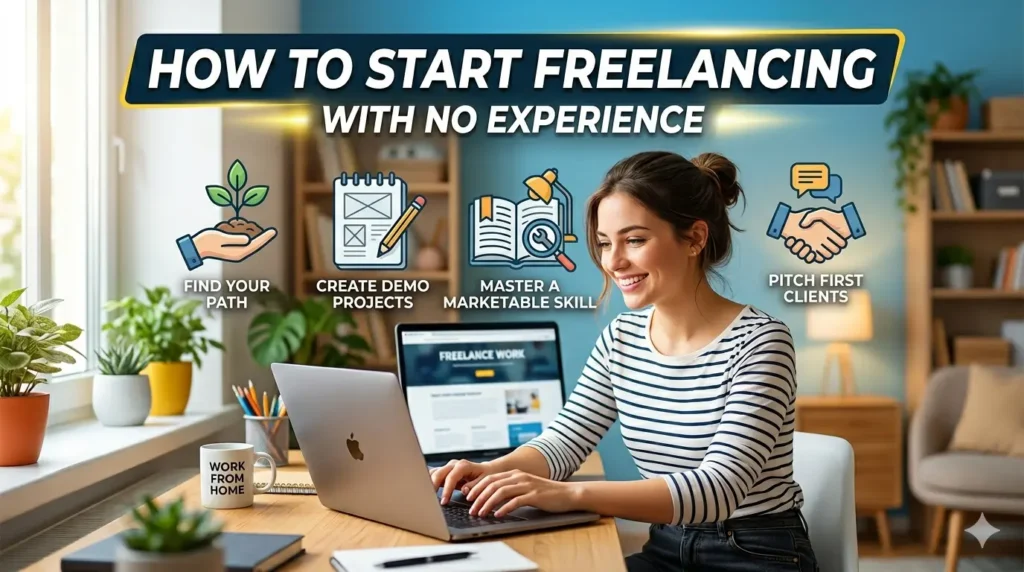
Learning how to start freelancing with no experience involves a series of actionable steps. Let’s go through each stage in detail
Step 1: Identify Marketable Skills
Even if you are a complete beginner, you likely possess skills that are in demand. Popular freelance skills include:
- Content writing and copywriting: Writing blogs, product descriptions, or website content.
- Graphic design: Designing social media posts, logos, or simple marketing visuals.
- Web development: Creating basic websites using tools like WordPress or Wix.
- Virtual assistance: Managing emails, scheduling, and basic admin work.
- Social media management: Planning and posting content for brands.
- Data entry and research: Collecting and organizing information for businesses.
Focus on a skill that you can confidently offer while being willing to learn and improve as you go.
Step 2: Learn and Upskill
Although freelancing doesn’t always require formal experience, having a working knowledge of your chosen skill significantly increases your chances of landing clients. Fortunately, online learning resources make it easier than ever:
- Udemy and Coursera: Offer beginner courses on everything from writing to graphic design.
- LinkedIn Learning: Provides professional courses with certifications.
- YouTube tutorials: Free tutorials are available for almost every skill imaginable.
For example, if you want to start as a freelance writer, you can learn the basics of SEO, grammar, and formatting. Similarly, aspiring graphic designers can master Canva or Photoshop through online tutorials. The more prepared you are, the more confident you’ll feel pitching to clients.
Step 3: Choose a Freelancing Platform
Freelancing platforms act as a bridge between clients and beginners. Popular platforms include:
- Fiverr: Ideal for beginners; allows you to create small “gigs” starting at affordable prices.
- Upwork: Offers a variety of jobs and longer-term projects; perfect for building a professional reputation.
- Freelancer.com: Allows competitive bidding for projects in multiple categories.
- Toptal: High-end platform for advanced professionals but useful for long-term growth.
Choosing the right platform depends on your skill, niche, and level of confidence. Beginners often benefit from starting on Fiverr because it’s straightforward and doesn’t require prior experience.
Step 4: Build a Portfolio Without Clients
One of the biggest challenges for beginners is having a portfolio to showcase. Even without prior clients, you can create sample work:
- Write mock articles or blogs on topics you enjoy.
- Design logos or social media posts for imaginary brands.
- Build a demo website to showcase design or development skills.
A strong portfolio demonstrates your capabilities and reassures clients that you can deliver quality work. It is a crucial step in learning how to start freelancing with no experience.
Step 5: Crafting an Impressive Profile
Your profile on freelancing platforms is your first impression. Make sure it is professional and optimized for search:
- Profile photo: Use a clear, friendly, professional photo.
- Bio/Description: Highlight your skills, learning attitude, and what you can deliver. Use your focus keyword naturally.
- Portfolio: Include sample projects to show practical experience.
- Keywords: Include relevant keywords like “how to start freelancing with no experience” to improve visibility.
A well-optimized profile increases your chances of being discovered by potential clients.
Step 6: Applying for Your First Job
The first client is always the hardest to get, but persistence pays off. Tips for beginners:
- Write personalized proposals tailored to the client’s needs.
- Show enthusiasm and willingness to learn.
- Highlight how your skills can solve the client’s problem.
- Include your portfolio samples for credibility.
Expect to send multiple proposals before landing your first project. This is normal and part of learning how to start freelancing with no experience.
Step 7: Pricing Your Services
Pricing can be tricky for beginners. Consider the following:
- Start with lower, competitive rates to gain experience.
- Focus on delivering quality and building a reputation rather than earning fast.
- Gradually increase rates as you gain reviews and expertise.
Pricing strategically ensures you attract clients while valuing your time and effort.
Step 8: Managing Client Communication
Good communication is key to long-term success:
- Respond to messages promptly.
- Set clear expectations regarding deliverables and timelines.
- Provide regular updates and progress reports.
- Handle feedback professionally without taking it personally.
Clients appreciate freelancers who communicate well and meet deadlines consistently.
Step 9: Essential Tools for Freelancers
Tools can enhance efficiency and professionalism:
- Project Management: Trello, Asana, or ClickUp.
- Communication: Slack, Zoom, or Microsoft Teams.
- File Sharing: Google Drive or Dropbox.
- Finance: PayPal, Wise, or QuickBooks for managing invoices and payments.
Being organized and equipped with the right tools gives you a competitive edge.
Step 10: Marketing Yourself as a Beginner
Even if you’re new, self-promotion is critical:
- Share your work on social media and LinkedIn.
- Join relevant online communities and forums.
- Ask friends and family for referrals.
- Consider creating a blog or website to showcase your portfolio.
Consistent marketing increases your visibility and helps attract clients, accelerating your growth as a freelancer.
Step 11: Avoiding Common Freelancing Mistakes
Beginners often make mistakes that hinder their growth:
- Overpromising results and underdelivering.
- Ignoring contracts or terms of work.
- Neglecting skill improvement.
- Taking on too many projects simultaneously.
Avoiding these pitfalls ensures you maintain a professional image and build a sustainable career.
Step 12: Benefits of Starting Freelancing Early
Starting freelancing, even without experience, comes with many benefits:
- Gain practical experience quickly.
- Build a portfolio and establish credibility.
- Understand market trends and client expectations.
- Achieve financial independence while learning.
The sooner you start, the faster your freelancing career will grow.
Step 13: Challenges You May Face
Freelancing isn’t always smooth, especially for beginners:
- Finding the first client can take time.
- Rejection and client non-responsiveness can be discouraging.
- Managing multiple projects requires strong organization skills.
- Maintaining motivation is crucial in a self-driven career.
These challenges are part of the journey and can be overcome with persistence.
FAQs About Starting Freelancing with No Experience
Q1: Can I really start freelancing without any prior work experience?
Absolutely. Many freelancers start by creating small sample projects, offering services at lower rates, and gradually gaining real clients.
Q2: Which skills are easiest for beginners?
Writing, social media management, virtual assistance, and basic graphic design are beginner-friendly.
Q3: How much can I earn initially?
Beginners may earn $50–$200 per small project, with the potential to increase as you gain experience.
Q4: Do I need a personal website?
Not immediately, but a website adds credibility and helps showcase your portfolio.
Q5: How do I handle rejection?
Stay persistent, refine your proposals, improve your skills, and view each “no” as a learning opportunity.
Q6: Should I work on multiple platforms?
Yes. Expanding across platforms increases your chances of getting clients.
Q7: How long does it take to land the first client?
Typically 1–2 weeks of consistent applications and proposals yield results.
Conclusion
Learning how to start freelancing with no experience is entirely possible. By identifying your skills, building a portfolio, joining freelancing platforms, and marketing yourself strategically, you can build a successful and sustainable freelancing career.
Freelancing offers flexibility, financial independence, and growth opportunities for beginners willing to put in the effort. Start today, be patient, and let your experience grow along with your income.
Pro Tip: Focus on delivering value, seek feedback, and continuously learn new skills. The more you invest in yourself, the faster your freelancing career will flourish.