
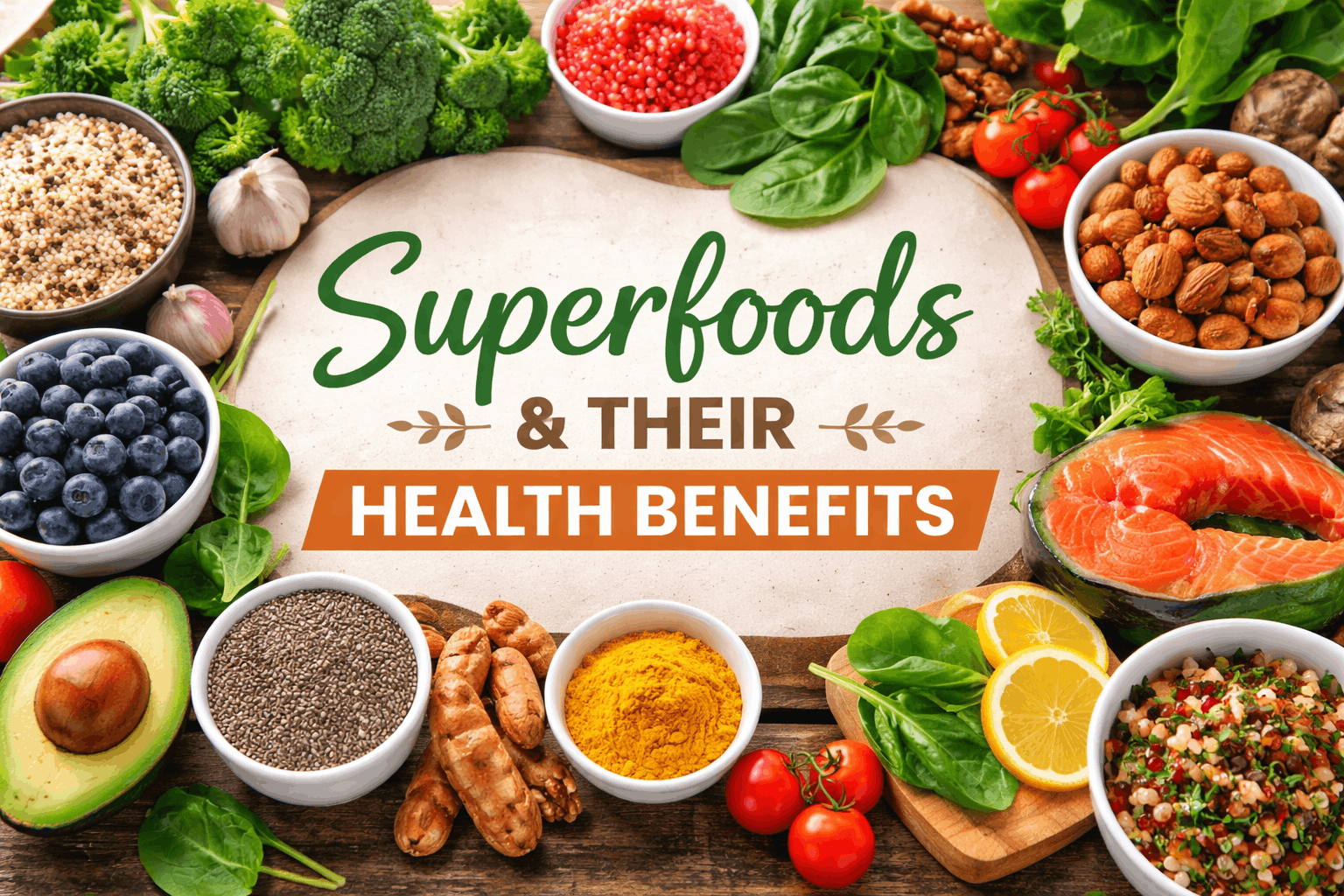
What Are Superfoods?
In today’s fast-moving world, maintaining good health has become more important than ever. People are constantly searching for natural ways to improve immunity, boost energy, manage weight, and prevent diseases. This is where superfoods come into the picture.
Superfoods are nutrient-dense foods that offer exceptional health benefits. They are packed with vitamins, minerals, antioxidants, healthy fats, fiber, and other essential nutrients that support overall well-being. While there is no official scientific definition of “superfood,” the term is commonly used to describe foods that provide maximum nutritional value with minimal calories.
Adding superfoods to your daily diet can help strengthen your immune system, protect your heart, improve digestion, enhance brain function, and even slow down aging. In this detailed guide, we will explore the best superfoods and their health benefits, how they work, and how you can easily include them in your daily meals.
Let’s dive into the world of superfoods and discover how they can transform your health naturally.
What Makes a Food a Superfood?
Not every healthy food is called a superfood. So what makes certain foods “super”?
1. High Nutrient Density
Superfoods contain high levels of essential nutrients compared to their calorie content. This includes:
- Vitamins (A, C, E, K, B-complex)
- Minerals (iron, magnesium, calcium, potassium)
- Antioxidants
- Fiber
- Healthy fats
- Plant compounds (phytonutrients)
2. Rich in Antioxidants
Antioxidants protect your body from free radicals, which are harmful molecules that cause cell damage and aging. Superfoods often contain powerful antioxidants that reduce inflammation and lower the risk of chronic diseases.
3. Natural and Minimally Processed
Most superfoods are whole, natural foods such as fruits, vegetables, seeds, nuts, fish, and grains.
4. Proven Health Benefits
Many superfoods are backed by scientific research showing their positive impact on heart health, digestion, immunity, brain function, and weight management.
Now let’s explore the top superfoods and their health benefits in detail.
Top Superfoods and Their Health Benefits
1. Blueberries – The Antioxidant Powerhouse
Blueberries are often called one of the healthiest fruits in the world.
Health Benefits:
- Rich in antioxidants that protect against cell damage
- Improve brain function and memory
- Support heart health
- Help control blood sugar levels
- Reduce inflammation
Blueberries contain anthocyanins, which give them their deep blue color and powerful antioxidant properties. Regular consumption may help reduce the risk of heart disease and cognitive decline.
How to Use:
Add them to smoothies, oatmeal, yogurt, or eat them as a snack.
2. Spinach – The Green Superfood
Spinach is loaded with vitamins and minerals.
Health Benefits:
- High in iron for energy production
- Rich in vitamin K for bone health
- Supports eye health
- Boosts immunity
- Improves digestion
Spinach is low in calories but extremely high in nutrients, making it ideal for weight management.
How to Use:
Add to salads, smoothies, soups, or sauté as a side dish.
3. Salmon – Rich in Omega-3 Fatty Acids
Salmon is one of the best sources of healthy fats.
Health Benefits:
- Supports heart health
- Reduces inflammation
- Improves brain function
- Enhances skin health
- Supports joint health
Omega-3 fatty acids help reduce bad cholesterol and lower the risk of heart disease.
How to Use:
Grill, bake, or add to salads and sandwiches.
4. Chia Seeds – Tiny but Powerful
Chia seeds may be small, but they are packed with nutrients.
Health Benefits:
- High in fiber for digestion
- Supports weight loss
- Rich in omega-3 fatty acids
- Stabilizes blood sugar
- Boosts energy
Chia seeds absorb water and form a gel-like texture, helping you feel full longer.
How to Use:
Add to smoothies, yogurt, or make chia pudding.
5. Avocado – The Healthy Fat Superfood
Avocados are rich in monounsaturated fats.
Health Benefits:
- Supports heart health
- Improves skin and hair
- Helps absorb nutrients
- Controls blood pressure
- Aids weight management
Despite being high in calories, avocados promote fullness and reduce unhealthy cravings.
How to Use:
Add to salads, toast, smoothies, or make guacamole.
6. Turmeric – The Natural Anti-Inflammatory
Turmeric contains curcumin, a powerful anti-inflammatory compound.
Health Benefits:
- Reduces inflammation
- Supports joint health
- Boosts immunity
- Improves digestion
- May reduce risk of chronic diseases
How to Use:
Add to curries, soups, milk (golden milk), or smoothies.
7. Almonds – Nutrient-Dense Nuts
Almonds are rich in healthy fats, protein, and vitamin E.
Health Benefits:
- Improve heart health
- Support brain function
- Regulate blood sugar
- Promote healthy skin
- Aid weight control
How to Use:
Eat raw, soaked, or add to salads and oatmeal.
8. Sweet Potatoes – Rich in Beta-Carotene
Sweet potatoes are loaded with fiber and vitamins.
Health Benefits:
- Improve eye health
- Boost immunity
- Support gut health
- Provide steady energy
How to Use:
Bake, mash, or add to soups.
9. Quinoa – Complete Plant Protein
Quinoa is a gluten-free grain rich in protein.
Health Benefits:
- Supports muscle growth
- Improves digestion
- Controls blood sugar
- Aids weight management
How to Use:
Use as rice replacement, in salads, or breakfast bowls.
10. Yogurt – Gut-Friendly Superfood
Yogurt contains probiotics that improve gut health.
Health Benefits:
- Strengthens immunity
- Improves digestion
- Supports bone health
- Enhances nutrient absorption
Choose plain, unsweetened yogurt for maximum benefits.
Major Health Benefits of Superfoods
1. Boosting Immunity
Superfoods like spinach, blueberries, turmeric, and yogurt are rich in vitamins C, E, and probiotics that strengthen your immune system and protect against infections.
2. Improving Heart Health
Salmon, almonds, chia seeds, and avocados support heart health by:
- Lowering bad cholesterol
- Reducing inflammation
- Improving blood circulation
3. Supporting Digestive Health
Fiber-rich superfoods like chia seeds, sweet potatoes, and quinoa promote healthy digestion and prevent constipation.
4. Weight Management
Superfoods are nutrient-dense but filling, helping reduce overeating. High-fiber foods increase fullness and stabilize blood sugar levels.
5. Enhancing Brain Function
Omega-3 fatty acids in salmon and antioxidants in blueberries improve memory, focus, and cognitive function.
6. Reducing Inflammation
Chronic inflammation leads to many diseases. Turmeric, berries, and leafy greens help reduce inflammation naturally.
How to Add Superfoods to Your Daily Diet
Incorporating superfoods does not require drastic changes.
Breakfast Ideas:
- Smoothie with spinach, blueberries, chia seeds
- Oatmeal topped with almonds and fruits
- Yogurt with chia seeds
Lunch Ideas:
- Quinoa salad with avocado
- Grilled salmon with vegetables
- Spinach and sweet potato bowl
Dinner Ideas:
- Turmeric vegetable soup
- Baked salmon with quinoa
- Stir-fried greens
Snack Ideas:
- Handful of almonds
- Greek yogurt
- Fresh fruits
Are Superfoods a Marketing Trend?
While the term “superfood” is often used in marketing, the nutritional benefits are real. However:
- No single food can cure diseases.
- Balance is important.
- Variety matters more than focusing on one food.
Superfoods work best as part of a balanced diet combined with exercise and healthy habits.
Common Mistakes to Avoid
- Eating only one superfood repeatedly
- Ignoring portion sizes
- Choosing processed “superfood” products with added sugar
- Expecting instant results
Health improvement takes time and consistency.
Superfoods and Disease Prevention
Many superfoods may help reduce the risk of:
- Heart disease
- Diabetes
- Obesity
- Digestive disorders
- Cognitive decline
Their antioxidants and anti-inflammatory compounds protect cells and improve overall body function.
Final Thoughts: Why You Should Start Today
Superfoods and their health benefits are not just a trend — they are a smart and natural way to improve your overall well-being. From boosting immunity to supporting heart and brain health, these nutrient-rich foods provide powerful protection for your body.
Start small. Add one or two superfoods to your meals each week. Focus on consistency rather than perfection. Over time, these simple changes can lead to significant improvements in your health.
Remember, the goal is not perfection — it’s progress. Nourish your body with the right foods, stay active, and enjoy the journey toward a healthier life.
Here are 8 detailed FAQs (Frequently Asked Questions) for your blog on Superfoods and Their Health Benefits:
1. What are superfoods?
Superfoods are nutrient-dense foods that are especially beneficial for your health and well-being. These foods are packed with vitamins, minerals, antioxidants, healthy fats, fiber, and other essential nutrients that support overall wellness. Examples of superfoods include blueberries, spinach, kale, quinoa, avocados, and salmon. While no official scientific definition exists, superfoods are widely recognized for their exceptional nutritional value.
2. Why are superfoods important for health?
Superfoods are important because they provide the body with an array of vital nutrients that can help improve immunity, fight inflammation, enhance brain function, and support heart health. These foods are rich in antioxidants, which protect the body from oxidative stress and free radical damage. Including superfoods in your diet can help prevent chronic diseases, manage weight, and promote overall vitality.
3. How do superfoods boost immunity?
Superfoods like citrus fruits, spinach, and garlic are rich in vitamins and minerals that are essential for a strong immune system. Vitamin C (found in oranges and bell peppers) boosts the production of white blood cells, which are crucial for fighting off infections. Zinc, found in foods like almonds and pumpkin seeds, also plays a vital role in immune function. Additionally, antioxidants like those found in blueberries and turmeric help reduce inflammation, further supporting immune health.
4. Can superfoods help with weight management?
Yes, superfoods can be beneficial for weight management. Many superfoods are high in fiber, which helps you feel full longer and prevents overeating. Foods like chia seeds, quinoa, and leafy greens are excellent sources of fiber. Additionally, the healthy fats found in avocados and salmon can help regulate metabolism and promote satiety, reducing unhealthy cravings. By incorporating superfoods into your meals, you can maintain a balanced diet while managing your weight effectively.
5. Which superfoods are best for heart health?
Superfoods that promote heart health are rich in omega-3 fatty acids, antioxidants, and fiber. Examples include:
- Salmon: High in omega-3 fatty acids, which help reduce bad cholesterol and lower the risk of heart disease.
- Avocados: Contain monounsaturated fats that help lower cholesterol levels and support healthy blood circulation.
- Berries: Blueberries, strawberries, and raspberries are rich in antioxidants that protect against oxidative stress and support vascular health.
- Nuts: Almonds and walnuts provide healthy fats and fiber, both of which contribute to maintaining healthy cholesterol levels.
6. How do superfoods improve brain function?
Superfoods can significantly enhance cognitive function and brain health due to their high content of antioxidants, healthy fats, and essential vitamins. Omega-3 fatty acids found in salmon and chia seeds are crucial for brain function, improving memory and concentration. Additionally, antioxidants found in foods like blueberries and dark leafy greens protect brain cells from oxidative damage and may reduce the risk of age-related cognitive decline. Superfoods like walnuts and pumpkin seeds also contain essential minerals like magnesium and zinc, which support mental clarity and focus.
7. What are the best superfoods for digestion?
Many superfoods are excellent for supporting healthy digestion due to their high fiber content and ability to promote a balanced gut microbiome. Some of the best superfoods for digestion include:
- Chia seeds: Rich in soluble fiber, chia seeds help regulate bowel movements and support gut health.
- Kefir and yogurt: These fermented foods are packed with probiotics that enhance gut flora, improve digestion, and promote gut health.
- Ginger: Known for its anti-inflammatory properties, ginger helps soothe the stomach, reduce bloating, and aid in digestion.
- Sweet potatoes: High in fiber and rich in prebiotics, sweet potatoes support the growth of healthy gut bacteria.
8. How can I include superfoods in my daily diet?
Incorporating superfoods into your daily diet is easy and can be done with just a few simple swaps:
- Breakfast: Add chia seeds or flaxseeds to smoothies, oatmeal, or yogurt for a nutrient boost. You can also include berries for added antioxidants.
- Lunch: Make a quinoa salad with leafy greens, avocado, and a handful of nuts. Include fish like salmon for an omega-3 boost.
- Snacks: Keep almonds, walnuts, or dried berries as healthy snacks. You can also make a homemade smoothie with spinach, avocado, and protein-rich seeds.
- Dinner: Include vegetables like spinach, kale, and sweet potatoes in your meals. Pair with grilled salmon or a plant-based protein for a balanced dish.
- Drinks: Try turmeric-based drinks like golden milk or ginger tea to boost digestion and reduce inflammation.