
Introduction
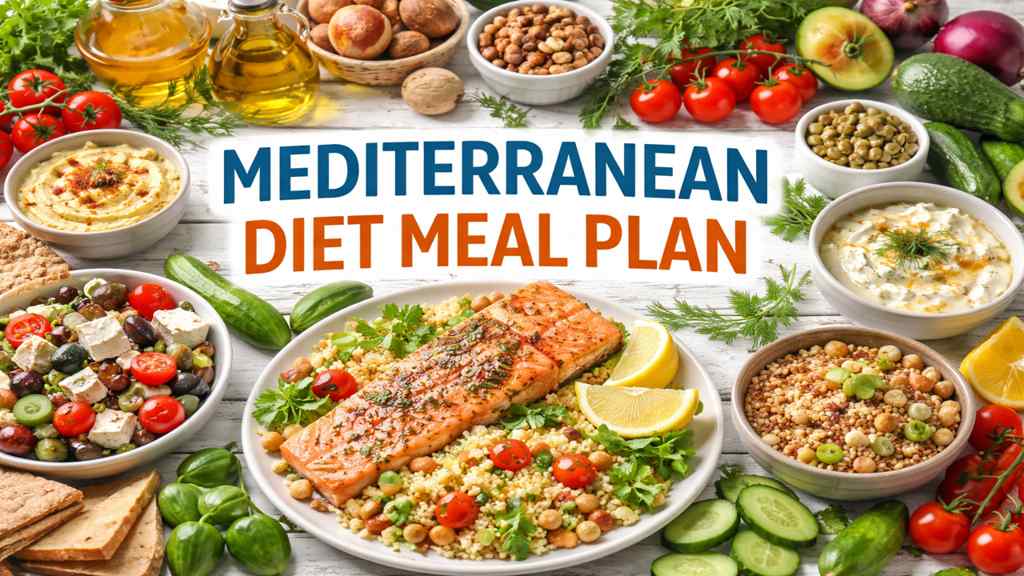
If you are searching for a sustainable, heart-healthy, and scientifically proven way to eat, the Mediterranean diet meal plan could be your perfect solution. Unlike restrictive diets that focus on cutting food groups, this approach promotes balance, fresh ingredients, and long-term wellness.
Inspired by the traditional eating patterns of countries bordering the Mediterranean Sea, this diet is not just about food — it’s a lifestyle. It encourages whole grains, healthy fats, fresh vegetables, lean proteins, and mindful eating.
In this comprehensive guide, you will learn:
- What the Mediterranean diet is
- Core principles of the Mediterranean diet meal plan
- Weekly meal plan structure
- Detailed daily sample menus
- Health benefits backed by science
- Grocery shopping guide
- Meal prep strategies
- Weight loss tips
- Vegetarian options
- Common mistakes to avoid
- FAQs
Let’s dive deep into everything you need to know.
What Is the Mediterranean Diet?
The Mediterranean diet is based on the traditional eating habits of people from countries like:
- Greece
- Italy
- Spain
People in these regions have historically enjoyed lower rates of heart disease, obesity, and chronic illnesses. Researchers found that their dietary habits played a major role.
A Mediterranean diet meal plan focuses on:
- Fresh fruits and vegetables
- Whole grains
- Olive oil as the primary fat
- Nuts and seeds
- Legumes
- Fish and seafood
- Moderate dairy
- Limited red meat
- Optional moderate red wine
This way of eating is considered one of the healthiest in the world.
Core Principles of the Mediterranean Diet Meal Plan
Understanding the core principles will help you follow the Mediterranean diet meal plan correctly.
1. Eat Mostly Plant-Based Foods
Vegetables and fruits form the foundation of this diet. Aim for:
- 5–10 servings of vegetables daily
- 2–4 servings of fruits daily
Leafy greens, tomatoes, cucumbers, zucchini, eggplant, and bell peppers are common choices.
2. Use Healthy Fats
Olive oil replaces butter and refined oils. It is rich in monounsaturated fats and antioxidants.
Healthy fat sources include:
- Extra virgin olive oil
- Avocados
- Almonds
- Walnuts
3. Choose Whole Grains
Instead of white rice or white bread, choose:
- Brown rice
- Whole wheat bread
- Quinoa
- Barley
- Oats
Whole grains provide fiber, vitamins, and slow-releasing energy.
4. Eat Fish Regularly
Fatty fish are a major part of the Mediterranean diet meal plan. Try to eat fish at least twice a week.
Examples:
- Salmon
- Sardines
- Tuna
- Mackerel
These provide omega-3 fatty acids.
5. Limit Red Meat
Red meat is consumed occasionally, not daily. Poultry and plant proteins are preferred.
6. Enjoy Meals Mindfully
Meals are often eaten slowly with family and friends. Lifestyle matters as much as food.
Health Benefits of the Mediterranean Diet Meal Plan
Scientific studies consistently show powerful health benefits.
1. Supports Heart Health
This diet lowers LDL (bad cholesterol) and increases HDL (good cholesterol). It reduces inflammation and supports healthy blood pressure.
2. Promotes Weight Loss
The Mediterranean diet meal plan helps with natural weight loss because:
- High fiber keeps you full
- Healthy fats reduce cravings
- Balanced meals prevent overeating
3. Reduces Risk of Type 2 Diabetes
Whole grains and healthy fats stabilize blood sugar levels.
4. Improves Brain Function
Studies link this diet to lower risk of Alzheimer’s disease and cognitive decline.
5. Anti-Inflammatory Benefits
Antioxidant-rich foods reduce chronic inflammation in the body.
Complete Mediterranean Diet Meal Plan (7 Days)
Below is a structured weekly Mediterranean diet meal plan.
Day 1
Breakfast
Greek yogurt with berries, honey, and walnuts
Lunch
Quinoa salad with cucumber, tomato, olives, feta, olive oil
Snack
Apple with almonds
Dinner
Grilled salmon, roasted vegetables, brown rice
Day 2
Breakfast
Whole grain toast with avocado and boiled eggs
Lunch
Lentil soup with side salad
Snack
Hummus with carrot sticks
Dinner
Grilled chicken with sautéed spinach and quinoa
Day 3
Breakfast
Oatmeal with chia seeds and fresh fruits
Lunch
Chickpea salad with olive oil dressing
Snack
Mixed nuts
Dinner
Baked cod with roasted sweet potatoes and broccoli
Day 4
Breakfast
Smoothie with banana, spinach, almond milk
Lunch
Whole wheat pasta with tomato sauce and grilled vegetables
Snack
Greek yogurt
Dinner
Grilled shrimp with Mediterranean salad
Day 5
Breakfast
Scrambled eggs with tomatoes and spinach
Lunch
Falafel wrap in whole wheat pita
Snack
Fresh orange
Dinner
Baked salmon with quinoa and asparagus
Day 6
Breakfast
Overnight oats with nuts and berries
Lunch
Tuna salad with olive oil and lemon
Snack
Cucumber slices with hummus
Dinner
Grilled vegetable platter with feta and whole grain bread
Day 7
Breakfast
Greek yogurt parfait
Lunch
Mediterranean couscous bowl
Snack
Handful of walnuts
Dinner
Grilled chicken, roasted eggplant, brown rice
Grocery List for Mediterranean Diet Meal Plan
To follow the Mediterranean diet meal plan easily, stock your kitchen with:
Vegetables
- Spinach
- Kale
- Zucchini
- Tomatoes
- Bell peppers
- Broccoli
Fruits
- Apples
- Oranges
- Berries
- Grapes
Proteins
- Salmon
- Tuna
- Chicken breast
- Lentils
- Chickpeas
Grains
- Brown rice
- Quinoa
- Oats
- Whole wheat bread
Healthy Fats
- Olive oil
- Almonds
- Walnuts
- Chia seeds
Mediterranean Diet Meal Plan for Weight Loss
If your goal is weight loss, follow these tips:
- Control portion sizes
- Increase vegetable intake
- Avoid sugary drinks
- Limit processed foods
- Eat slowly
This version of the Mediterranean diet meal plan is naturally lower in calories but high in nutrition.
Vegetarian Mediterranean Diet Meal Plan
Vegetarians can easily adapt this plan.
Protein sources include:
- Lentils
- Chickpeas
- Beans
- Tofu
- Greek yogurt
Replace fish with plant-based protein options.
Meal Prep Tips
Meal preparation makes following the Mediterranean diet meal plan easier:
- Cook grains in bulk
- Chop vegetables in advance
- Store olive oil dressing separately
- Prepare snacks in small containers
Consistency is key.
Common Mistakes to Avoid
- Using too much olive oil
- Eating too much cheese
- Ignoring portion control
- Not eating enough vegetables
- Consuming processed “Mediterranean-style” foods
Remember, balance is essential.
Lifestyle Habits to Follow
The Mediterranean diet meal plan works best when combined with:
- Daily walking
- Strength training
- Proper sleep
- Stress management
- Social eating
Lifestyle makes a difference.
Frequently Asked Questions (FAQs) About Mediterranean Diet Meal Plan
Below are detailed answers to the most commonly searched questions about the Mediterranean diet meal plan. Each answer explains not just what to do, but why it works and how to apply it in real life.
1. What exactly is included in a Mediterranean diet meal plan?
A Mediterranean diet meal plan includes whole, natural, and minimally processed foods. The foundation is plant-based, meaning most meals revolve around vegetables, fruits, legumes, nuts, seeds, and whole grains.
Core components include:
- Vegetables (spinach, zucchini, tomatoes, eggplant, peppers)
- Fruits (berries, oranges, apples, grapes)
- Whole grains (brown rice, quinoa, barley, whole wheat bread)
- Healthy fats (extra virgin olive oil, nuts, seeds, avocado)
- Lean proteins (fish, seafood, poultry, legumes)
- Moderate dairy (Greek yogurt, feta cheese)
- Limited red meat and sweets
The goal of a Mediterranean diet meal plan is balance — not restriction. You eat satisfying meals rich in nutrients while avoiding ultra-processed foods.
2. Is the Mediterranean diet meal plan good for weight loss?
Yes, it is one of the most sustainable diets for weight loss. Unlike crash diets, the Mediterranean diet meal plan supports gradual and healthy fat loss.
Here’s why it works:
- High fiber from vegetables and whole grains keeps you full longer.
- Healthy fats reduce cravings and stabilize hunger hormones.
- Balanced meals prevent blood sugar spikes.
- Whole foods naturally reduce calorie intake without strict counting.
Weight loss results vary, but many people lose 0.5–1 kg per week when combining the Mediterranean diet meal plan with regular exercise.
3. How many calories are in a Mediterranean diet meal plan?
Calories depend on portion size and food choices. A typical Mediterranean diet meal plan ranges between:
- 1,500–1,800 calories for weight loss
- 1,800–2,200 calories for maintenance
- 2,200+ calories for active individuals
Instead of obsessing over calories, focus on quality:
- Fill half your plate with vegetables.
- Include lean protein in every meal.
- Add healthy fats in moderate amounts.
Because this diet emphasizes nutrient-dense foods, many people naturally regulate their calorie intake without strict tracking.
4. Can Indians follow the Mediterranean diet meal plan?
Absolutely. The Mediterranean diet meal plan can be adapted using Indian ingredients.
Examples:
- Replace quinoa with millets or brown rice.
- Use olive oil instead of refined vegetable oil.
- Eat dal (lentils) as plant protein.
- Include vegetables like bhindi, lauki, and cabbage.
- Choose grilled or baked dishes instead of deep-fried food.
The key is cooking style and balance, not specific foreign ingredients.
5. Is rice allowed in a Mediterranean diet meal plan?
Yes, rice is allowed — preferably brown rice or other whole grains. White rice can be eaten occasionally but should not be the primary grain.
Better alternatives:
- Brown rice
- Red rice
- Barley
- Whole wheat roti
- Quinoa
Whole grains contain fiber, which supports digestion and helps control blood sugar.
6. Can vegetarians follow a Mediterranean diet meal plan?
Yes, and very easily. The Mediterranean diet meal plan is already plant-forward.
Vegetarian protein options include:
- Lentils
- Chickpeas
- Beans
- Tofu
- Paneer (in moderation)
- Greek yogurt
- Nuts and seeds
Replace fish with plant-based omega-3 sources like walnuts and flaxseeds.
7. How often can I eat meat in a Mediterranean diet meal plan?
Red meat is limited to 1–2 times per week or even less. Poultry can be eaten a few times per week. Fish is encouraged at least twice weekly.
The emphasis is:
- Fish and seafood: 2–3 times per week
- Poultry: Moderate
- Red meat: Occasionally
- Processed meat: Avoid
Reducing red meat intake lowers inflammation and improves heart health.
8. Is olive oil mandatory in a Mediterranean diet meal plan?
Olive oil is a key component, especially extra virgin olive oil. It is rich in monounsaturated fats and antioxidants.
However, if olive oil is expensive or unavailable, you can use:
- Cold-pressed mustard oil
- Groundnut oil (in moderation)
- Sesame oil
The important rule is avoiding refined and hydrogenated oils.
9. Can I eat dairy products?
Yes, but in moderation. The Mediterranean diet meal plan includes small portions of:
- Greek yogurt
- Feta cheese
- Goat cheese
- Milk (occasionally)
Dairy is not the main protein source. It complements meals rather than dominates them.
10. Is wine necessary in a Mediterranean diet meal plan?
No, wine is optional. In traditional Mediterranean cultures, moderate red wine is sometimes consumed with meals.
However:
- It is not mandatory.
- If you do not drink alcohol, you do not need to start.
- Excess alcohol cancels health benefits.
Water should be your main beverage.
11. How quickly will I see health benefits?
Many people notice improvements within 2–4 weeks, such as:
- Better digestion
- Improved energy levels
- Reduced bloating
- Better blood sugar control
Long-term benefits like reduced heart disease risk develop over months and years of consistent healthy eating.
12. Is the Mediterranean diet meal plan safe for diabetics?
Yes. It is highly recommended for people with Type 2 diabetes because it:
- Controls blood sugar
- Reduces insulin resistance
- Encourages low-glycemic foods
- Improves cholesterol levels
Always consult a healthcare professional before making major dietary changes.
Final Thoughts
The Mediterranean diet meal plan is more than just a diet — it is a sustainable lifestyle built on balance, simplicity, and nourishment. Instead of strict calorie counting or extreme food restrictions, it encourages whole foods, healthy fats, lean proteins, and plenty of vegetables. This makes it easy to follow for the long term.
One of the biggest strengths of the Mediterranean diet meal plan is flexibility. Whether you are vegetarian, non-vegetarian, living in India, the USA, or anywhere else, you can adapt local ingredients to fit this pattern. It does not require expensive superfoods — just smart, natural food choices.
If your goal is weight loss, better heart health, improved digestion, stable blood sugar, or overall wellness, the Mediterranean diet meal plan provides a scientifically backed approach. Combined with regular physical activity, good sleep, and mindful eating, it can transform not just your body but your entire lifestyle.
Start small. Replace refined oils with olive oil. Add one extra serving of vegetables daily. Choose whole grains over refined ones. Over time, these simple changes will create powerful, lasting results.
Healthy living is not about perfection — it’s about consistency.
Conclusion: Why the Mediterranean Diet Meal Plan Is a Lifelong Investment in Your Health
The Mediterranean diet meal plan is not a short-term trend, a restrictive weight-loss formula, or a complicated food system filled with rules. It is a balanced, realistic, and scientifically supported way of eating that promotes long-term health, sustainable weight management, and overall well-being.
In a world where diet culture often promotes extremes — cutting carbs completely, avoiding fats entirely, or following rigid meal schedules — the Mediterranean diet meal plan offers a refreshing alternative. It focuses on nourishment rather than deprivation. Instead of asking, “What should I eliminate?” it encourages you to ask, “What wholesome foods can I add?”
A Sustainable and Realistic Approach
One of the strongest reasons the Mediterranean diet meal plan works is sustainability. Many diets fail because they are too restrictive or unrealistic for daily life. This eating pattern allows flexibility:
- You can enjoy a variety of foods.
- You can adapt it to your culture and local ingredients.
- You don’t need expensive supplements.
- You don’t have to count every calorie.
Because it feels natural and satisfying, most people can follow the Mediterranean diet meal plan for years — even for life — without feeling deprived.
Scientifically Backed Health Benefits
Research consistently shows that the Mediterranean diet meal plan supports:
- Heart health
- Healthy cholesterol levels
- Stable blood sugar
- Reduced inflammation
- Improved brain function
- Lower risk of chronic diseases
Unlike fad diets that promise quick results without scientific support, this eating pattern has decades of research behind it. That makes it one of the most trusted and recommended diets by nutrition experts worldwide.
Supports Healthy Weight Management
If weight loss is your goal, the Mediterranean diet meal plan helps you achieve it naturally. It does not rely on starvation or extreme calorie restriction. Instead, it emphasizes:
- Fiber-rich vegetables
- Whole grains
- Lean proteins
- Healthy fats that keep you full
This combination reduces cravings, balances hunger hormones, and prevents overeating. Weight loss may not be extremely fast — but it is steady, healthy, and sustainable.
More Than Food: A Complete Lifestyle
Another important factor is that the Mediterranean diet meal plan is part of a broader lifestyle. It encourages:
- Eating slowly and mindfully
- Sharing meals with family
- Staying physically active
- Managing stress
- Prioritizing sleep
Health is not just about what is on your plate. It is also about how you live daily. When diet and lifestyle work together, the results are powerful and long-lasting.
Easy to Adapt Anywhere
You do not need to live near the Mediterranean Sea to follow this plan. The Mediterranean diet meal plan can be customized using local ingredients:
- In India, use lentils, millets, seasonal vegetables, and mustard oil or olive oil.
- In other regions, choose local whole grains and fresh produce.
- Replace processed snacks with nuts and fruits.
- Choose grilled or baked dishes instead of fried food.
The principles matter more than specific ingredients
Small Changes, Big Impact
You do not need to change everything overnight. Start with small steps:
- Replace refined oils with olive oil.
- Add an extra serving of vegetables daily.
- Switch from white bread to whole grain bread.
- Eat fish twice a week.
- Reduce sugary drinks.
Over time, these small improvements build a strong foundation for better health.